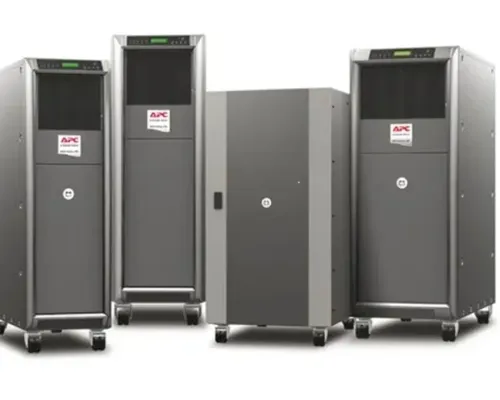
Schneider Electric UPS (Uninterruptible Power Supply) is a power protection system that provides backup power to electrical and electronic equipment when the main power supply fails. Schneider Electric offers UPS systems designed to protect computers, servers, data centers, industrial equipment, and other critical systems from power interruptions, voltage fluctuations, and electrical disturbances. A Schneider UPS normally uses batteries to supply power during an outage, giving users enough time to safely shut down equipment or continue operating until the main power is restored. Its UPS solutions are widely used because they provide reliable power backup, protection, monitoring, and efficient power management for both small and large installations. Schneider Electric is one of the world's leading companies in energy management and industrial automation. The company provides a wide range of electrical and digital solutions for homes, buildings, industries, data centers, and other critical infrastructure. One of its important product categories is the Uninterruptible Power Supply, commonly known as a UPS. A UPS is an electrical device designed to provide continuous and reliable power to connected equipment when the normal electrical supply becomes unavailable or unstable. Schneider Electric has developed UPS systems for applications ranging from personal computers and small offices to large data centers, hospitals, industrial facilities, telecommunications networks, and other critical installations. In the modern world, electricity is essential for almost every type of business and technological activity. Computers, servers, communication systems, medical equipment, industrial machines, security systems, and networking devices all depend on a stable supply of electricity. However, the electrical supply provided by the utility grid is not always perfectly reliable. Power failures, voltage fluctuations, surges, electrical noise, frequency variations, and other disturbances can occur unexpectedly. Even a very short interruption can cause serious problems for sensitive electronic equipment. A computer may lose unsaved information, a server may shut down unexpectedly, industrial equipment may stop operating, and critical medical or communication systems may be affected. A UPS helps prevent these problems by providing an alternative source of power and by protecting connected equipment from many common electrical disturbances. Schneider Electric's UPS portfolio is particularly important because it combines power backup with power protection, monitoring, energy efficiency, and digital management. The company's UPS products are available in different capacities and configurations, allowing organizations to select a system according to their power requirements and the importance of the connected load. Schneider Electric is also well known for its APC brand, which offers UPS products for home users, offices, IT infrastructure, and data centers. Through these solutions, Schneider Electric helps organizations maintain business continuity and protect critical electrical and electronic equipment. A typical UPS contains batteries, power electronics, control circuits, and protective components. During normal operation, the UPS receives electricity from the utility supply and provides power to the connected equipment. At the same time, it keeps its internal batteries charged. If the utility power fails or goes outside an acceptable range, the UPS changes to battery operation and continues supplying electricity to the connected equipment. Depending on the type and capacity of the UPS, the battery may provide power for a few minutes or considerably longer. The main purpose of a UPS is not simply to provide backup electricity. It also helps protect equipment from electrical problems. Depending on its design and operating mode, a UPS can protect against power outages, voltage sags, voltage surges, electrical noise, frequency variations, and other disturbances. Some advanced UPS systems also provide detailed information about energy consumption, battery condition, load level, operating status, and system health.

Gurugram
08048042133
+918802906862
 Chat with us
 Chat with us